Flood Insurance: The Coverage Your Homeowners Policy Is Missing (2026 Guide)
Here’s the most expensive insurance myth in America: “I’ve got homeowners insurance, so I’m covered if it floods.” I wish that were true. It isn’t — and most people don’t find out until there’s water in their living room and an adjuster saying, “I’m sorry, but that’s not covered.”
A single inch of floodwater can cause $25,000 or more in damage. Yet most homeowners skip flood insurance — some think their homeowners policy handles it, others were never told their “low-risk” street could flood.
Here’s what I’ll cover: what flood insurance pays for, what it costs in 2026, NFIP vs private options, the waiting-period trap, and how to buy before you need it.
Your Homeowners Policy Doesn’t Cover Flooding. Seriously.
Because this misunderstanding costs people their savings: standard homeowners insurance does not cover flood damage. Not “sort of.” Not “up to a point.” It’s excluded — full stop.
Your homeowners policy covers sudden water damage from inside your home — a burst pipe, a failed water heater, a washing machine hose that lets go at 2 a.m. What it won’t touch is water from outside that rises: storm surge, overflowing rivers, flash floods, heavy rain that overwhelms drainage. Insurers call all of that “flood,” and every standard policy draws the line there.
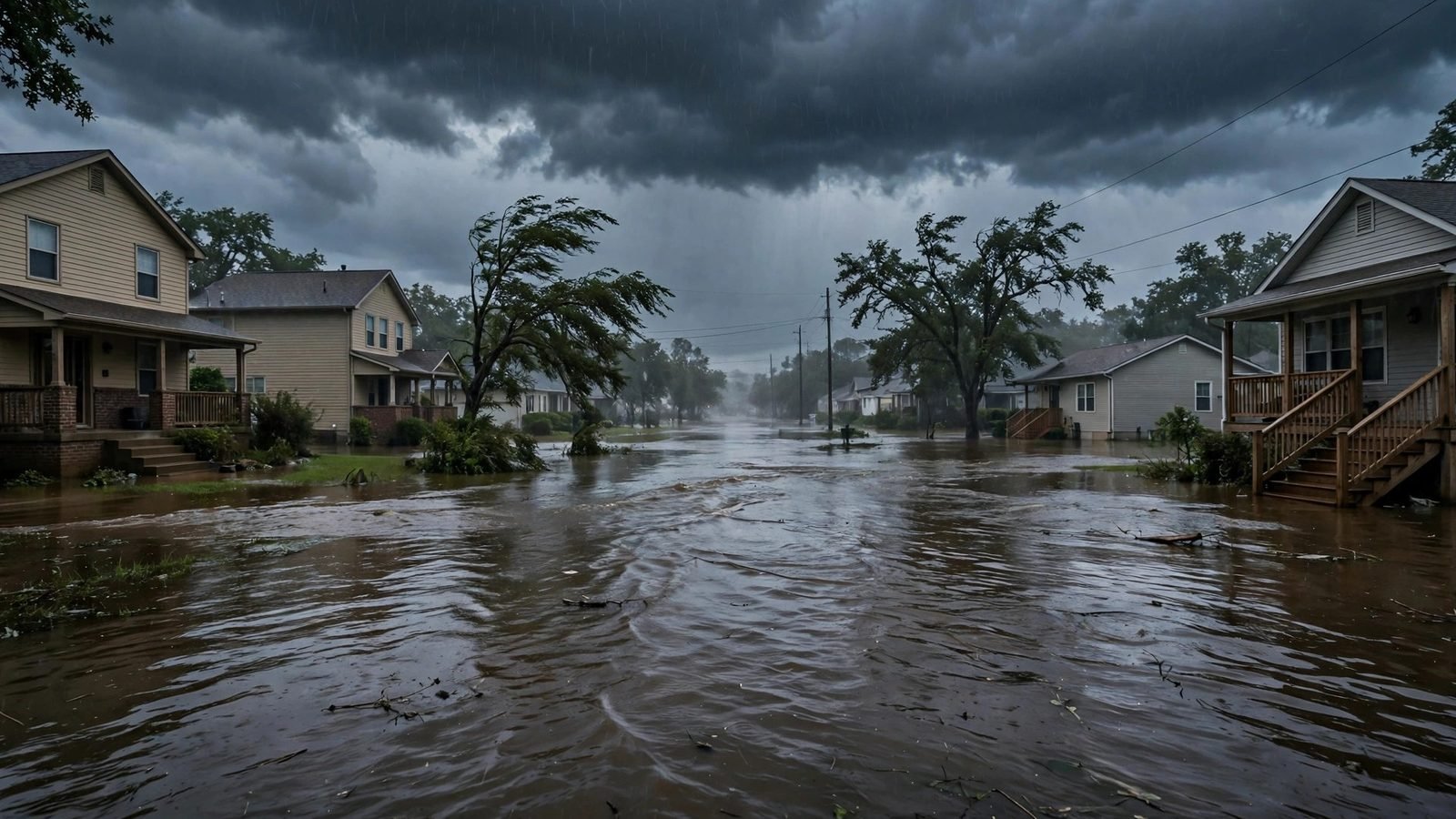
Hurricanes make this confusing, because a hurricane brings both. Wind damage? Covered (often with a higher coastal deductible). The storm surge that shoves three feet of Gulf water through your front door? That’s flood — and without flood insurance, you pay for it yourself.
Who is covered? People who bought a separate flood insurance policy — either through the federal National Flood Insurance Program (NFIP) or a private flood insurer. Two doors, one rule: walk through one before the water comes.
Flood Insurance Basics: The NFIP vs Private Flood Insurance
You’ve got two places to buy flood insurance, and they’re different enough that both are worth understanding first.
The NFIP is the federal program run by FEMA — and in many communities the cheapest option. It maxes out at $250,000 in building coverage and $100,000 in contents coverage. Building claims pay at replacement cost for a primary residence; contents claims pay at actual cash value (depreciated). One gap: no temporary housing coverage — if your home is unlivable, the NFIP won’t pay for a hotel.
Private flood insurance is sold by regular insurers outside the federal program. These policies can offer higher limits (often $500,000 to $1 million+), replacement-cost contents, loss-of-use coverage, and sometimes shorter waiting periods. The trade-off is wider pricing — private carriers can be cheaper than the NFIP in low-risk areas but far pricier in high-risk coastal zones, where some won’t write at all.
| Feature | NFIP (federal) | Private flood insurance |
|---|---|---|
| Max building coverage | $250,000 | Often $500,000–$1M+ |
| Max contents coverage | $100,000 | Often $250,000–$500,000+ |
| Contents paid at | Actual cash value (depreciated) | Often replacement cost |
| Loss of use / hotel costs | Not covered | Often included |
| Standard waiting period | 30 days | 0–15 days (varies) |
| Basement contents | Very limited | Broader (varies by policy) |
| Availability | Nearly everywhere | Varies by risk |
| Backed by | Federal government | The insurer’s finances |
Neither is automatically better. Need more than $250,000 to rebuild? Private coverage — or a private “excess” policy stacked on an NFIP one — is your answer. In a high-risk zone private carriers avoid? The NFIP will.
What Flood Insurance Costs in 2026
The number everyone wants: the average NFIP premium lands around $700 a year in 2026 nationally. That’s an average — your price could be half that or five times it, depending on your home’s risk.
FEMA prices NFIP policies under Risk Rating 2.0, which weighs your property’s individual risk — distance to water, elevation, flood frequency, rebuild cost — not just your zone. In practice:
- Low-to-moderate-risk areas: A preferred-risk NFIP policy runs a few hundred dollars a year — often $300–$500. It’s the cheapest flood insurance you’ll ever buy — and the most skipped. Don’t be most people.
- High-risk coastal zones: This is where it stings. Waterfront properties in high-risk zones routinely pay $2,000 to $5,000 or more a year. Buying on the coast? Get the flood quote before you fall in love with the house — it changes the affordability math.
- Inland river and flash-flood areas: Usually in the middle, $500–$1,500 depending on elevation and claims history.
Private flood insurance has no single national average — every carrier prices differently. In low-risk areas, private quotes often come in under the NFIP price with higher limits, so comparing both is worth your time. In high-risk zones, private coverage costs more but buys features the federal policy can’t touch.
Your deductible is the other lever. NFIP deductibles run $1,000 to $10,000, and raising yours can trim 20–30% off the premium. Just be honest about what you could hand over during the worst week of your life.
The 30-Day Waiting Period: You Can’t Buy It When the Storm Is Named
The trap that catches thousands every hurricane season: a standard NFIP policy takes 30 days to take effect. Buy September 1st, covered October 1st. If a hurricane is spinning toward the coast September 10th, that policy won’t help you.
Every year, people try. Agents get the same August calls: “Can I get flood insurance before the storm hits?” Same answer every time — you can buy today, but the 30-day clock starts today too. A named storm in the forecast doesn’t help.
There are narrow exceptions. If your lender requires flood insurance for a new or refinanced mortgage, coverage can start immediately. If your community’s flood map was just revised and your home landed in a high-risk zone, you get a grace period with a shorter wait. “I saw it on the weather channel” isn’t one of them.
Private flood insurers are often more flexible — many wait just 0 to 15 days instead of 30, a real advantage if you’re shopping late in the season. But no policy covers a flood already happening, and nobody sells you one while water is in your street.
Buy flood insurance on a boring Tuesday in spring, when the sky is clear and the waiting period is just paperwork. Future-you, watching storm coverage with a policy already in force, will be very glad you did.
Building vs Contents: Two Coverages You Buy Separately
A surprise for first-time buyers: under the NFIP, building coverage and contents coverage are separate purchases. Your policy doesn’t automatically include both — you choose each one. Skip contents to save a few dollars, and your furniture, clothes, and electronics are on their own.
Building coverage protects the structure: foundation, electrical and plumbing systems, HVAC, built-in appliances, installed cabinets and paneling. If floodwater wrecks it and it’s part of the house, building coverage pays.
Contents coverage protects your stuff: furniture, clothing, curtains, portable appliances, electronics, valuables (with sub-limits on art and jewelry). The catch — NFIP contents pay at actual cash value, meaning what your ten-year-old couch is worth today, not what a new one costs. Private policies often pay replacement cost instead — a meaningful upgrade for a house full of expensive gear.
Then there’s the basement fine print, where people get burned. Under the NFIP, basements get very limited coverage. The structure is covered — foundation walls, stairways, furnaces, water heaters — but most belongings down there are not. That finished basement with the home theater, carpet, and fresh drywall? Largely excluded. If your basement is your favorite room, look at a private policy with broader basement terms — or at least know the gap first.
Rule of thumb: insure the building for rebuild cost, insure contents for what it’d take to replace everything you own — and read the basement exclusions twice.
Flood Zone Myths: Why “Low Risk” Isn’t “No Risk”
“But I’m not in a flood zone.” I hear it constantly, and it’s the most dangerous sentence in flood insurance. Let’s dismantle it.
First, the number: roughly 1 in 4 flood claims paid by the NFIP come from moderate-to-low-risk zones — areas outside FEMA’s high-risk boundaries. Not beachfront mansions. Regular neighborhoods, mostly.
Why? Flood maps are snapshots, and the landscape keeps changing. New development upstream sends more runoff your way. Storms dump rainfall totals the old maps never imagined. Urban flash flooding — overwhelmed storm drains, not rivers — ignores your zone designation. And many maps are simply outdated.
Second myth: “My lender doesn’t require it, so I don’t need it.” Lenders only require flood insurance in high-risk zones (Special Flood Hazard Areas) with a federally backed mortgage. That’s a lending rule, not a safety rule — it says nothing about whether your street can flood. A quarter of all flood claims would like a word with that logic.
Third: “It never flooded here before.” Ask Houston after Harvey, or the mountain towns hit by Helene’s inland flooding hundreds of miles from any coast. “Never flooded” usually means “hasn’t flooded yet.”
The good news: in a low-to-moderate-risk zone, flood insurance is cheap. A few hundred dollars a year for real protection against a five-figure disaster. Best value in the insurance world — and the coverage most likely missing when people need it.
Frequently Asked Questions
Does homeowners insurance cover flooding?
No — the most common insurance misconception in the country. Standard homeowners policies exclude flooding: water rising from outside, including storm surge, overflowing rivers, flash floods, and rain that overwhelms drainage. Your policy covers burst pipes and similar sudden interior damage, but floodwater needs a separate flood insurance policy through the NFIP or a private insurer.
How long does flood insurance take to start?
A standard NFIP policy has a 30-day waiting period — you can’t buy it in response to an approaching storm. Narrow exceptions exist for lender-required coverage on new mortgages and recent flood map changes. Private flood insurance is usually faster at 0 to 15 days — so compare both when you shop.
What’s the difference between building and contents flood coverage?
Two separate coverages under the NFIP. Building coverage repairs the structure — foundation, electrical, plumbing, HVAC, built-ins. Contents coverage replaces belongings — furniture, clothes, electronics. NFIP contents pay depreciated actual cash value (private policies often pay replacement cost), and basement belongings are mostly excluded. Set building limits on rebuild cost and contents limits on what you own.
Do I need flood insurance if I’m not in a high-risk flood zone?
Your lender won’t require it there — but that doesn’t mean you’re safe. Roughly 1 in 4 flood claims come from moderate-to-low-risk areas, and maps miss plenty of risk. The upside: in low-risk zones flood insurance is cheap — often a few hundred dollars a year. If that protects you against a five-figure loss, it’s a bet worth taking.
Don’t Wait for the Water to Decide
Flood insurance is the rare financial product that’s cheapest when you need it least. A few hundred dollars a year in a low-risk zone. Maybe several thousand on the coast — but against a single inch of water doing $25,000 in damage, it’s not close.
Here’s your move, about an hour of work: get an NFIP quote and at least one private flood insurance quote for your address. Compare building and contents limits, check each waiting period, read the basement exclusions, and pick the combination that fits your home. Buying a house? Get the quote before closing — in high-risk zones, that premium is a real budget line item.
Water doesn’t check your flood zone before it shows up. Buy the coverage on a clear day, and you’ll never learn what “not covered” feels like.